Forearm Support Crutch

The idea for this design began when my grandfather suffered a stroke and temporarily lost the ability to walk. During hospital visits, I saw how difficult it was for him to stand or move even short distances using traditional walkers, which offered limited forearm support and stability. I wanted to create something that could better distribute weight, reduce strain, and make standing safer.

1. Arm Rest; 11. First Weakening Groove; 12. Limiting Structure; 121. Support Rod; 122. Rotating Shaft; 123. Fixed Rod; 13. L-shaped Limiting Groove; 2. Handle; 3. First Rod Body; 31. Damping Groove; 32. Damping Pressure Plate; 4. Second Rod Body; 5. Third Rod Body

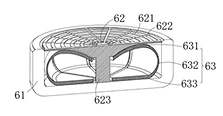
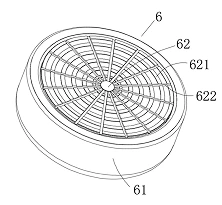
This led to the design of a forearm-support crutch, later registered as a utility patent. The concept features a primary rod with a vertically mounted handle, an armrest for forearm support, and a secondary adjustable rod connected to a stable base. Inside the lower section, a third internal rod links to a base mechanism engineered to prevent side slipping. When the rubber pad at the base encounters a stone or uneven surface, it deforms within a weakening groove, trapping the obstacle in place and improving traction and stability.


The design provides safer, more stable support for elderly users, helping individuals like my grandfather regain confidence and independence when standing or walking.

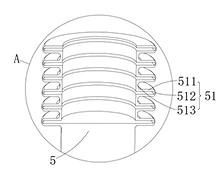
51. Damping Elastic Plate; 511. Horizontal Segment; 512. Damping Segment; 513. Connection Segment;6. Base Structure; 61. Base Tube; 62. Rubber Pad; 621. Anti-slip Protrusion; 622. Second Weakening Groove; 623. Connection Block; 63. Anti-slip Elastic Plate; 631. Contact Segment; 632. Deformation Segment; 633. Fixing Segment.